Julio Zúñiga Cisneros ID· Michael Camilleri ID· Madhusudan Grover ID
Division of Gastroenterology and Hepatology, Mayo Clinic.
Rochester,
Minnesota, USA.
Acta Gastroenterol Latinoam 2026;56(3):269-288
Received: 12/09/2026 / Accepted: 23/09/2026 / Published online: 30/09/2026 / https://doi.org/10.52787/agl.v56i3.690
Glucagon-like peptide-1 receptor agonist (GLP-1 RA) has transformed the management of type 2 diabetes and obesity, with expanding indications now spanning cardiovascular, renal, and hepatic disease. As exposure broadens across increasingly diverse populations, gastrointestinal adverse events (GIAEs) have emerged as the dominant tolerability limitation and a leading drug-related reason for discontinuation of treatment. This review synthesizes the mechanisms, clinical spectrum, and management of GLP-1 RA-associated GIAEs. These effects arise from a dual peripheral-central mechanism: peripheral receptor activation slows gastric motility, whereas activation in the area postrema and nucleus tractus solitarius (NTS) drives nausea and emesis. This dual mechanism explains why symptom severity may correlate poorly with the measured degree of gastric-emptying delay and why centrally acting antiemetics are most widely used to relieve nausea and emesis. Across clinical trials, nausea, emesis, diarrhea, constipation, and abdominal pain follow a consistent dose- and indication-dependent gradient, with the highest incidence observed with higher-dose obesity and MASH regimens and multi-agonist molecules. Most symptoms are mild, emerge during dose escalation, and attenuate over time, though a clinically important minority of patients experience persistent symptoms, and a subset develops gastroparesis. Management should rest on anticipation and screening of gastrointestinal symptoms at baseline, pretreatment counseling, gradual up-titration, and dietary measures before pharmacotherapy. Future priorities include standardized motility measurements and endpoints, predictive biomarkers, and evidence-based management algorithms.
Keywords. Glucagon-like peptide-1 receptors, drug-related side effects, nausea, gastroparesis, obesity, diabetes.
Los agonistas del receptor del péptido similar al glucagón tipo 1 (GLP-1 RA) han transformado el manejo de la diabetes mellitus tipo 2 y la obesidad, con indicaciones en expansión que abarcan enfermedades cardiovasculares, renales y hepáticas. A medida que su uso se extiende a poblaciones diversas, los eventos adversos gastrointestinales (GIAE) se han convertido en la principal limitación de tolerabilidad y una causa frecuente de suspensión del tratamiento. Esta revisión sintetiza los mecanismos, el espectro clínico y el manejo de los GIAE asociados con los GLP-1 RA. Estos efectos resultan de mecanismos periféricos y centrales: la activación periférica de los receptores enlentece la motilidad gástrica, mientras que la activación en el área postrema y el núcleo del tracto solitario podría contribuir a las náuseas y los vómitos. Esta dualidad explica la escasa correlación entre la intensidad de los síntomas y el retraso medido del vaciamiento gástrico, así como el uso frecuente de antieméticos de acción central. En ensayos clínicos, las náuseas, vómitos, diarrea, estreñimiento y dolor abdominal muestran un gradiente dependiente de la dosis y la indicación, con mayor frecuencia a dosis altas empleadas para obesidad y esteatohepatitis asociada a disfunción metabólica (MASH), así como con agonistas múltiples. La mayoría de los síntomas son leves, aparecen durante el escalamiento y disminuyen con el tiempo; sin embargo, una minoría presenta síntomas persistentes y un subgrupo desarrolla gastroparesia. El manejo debe ser anticipatorio e incluir evaluación basal, educación y medidas dietéticas antes del tratamiento farmacológico. Las prioridades futuras incluyen estandarizar las mediciones de motilidad gastrointestinal, identificar biomarcadores predictivos y desarrollar algoritmos de manejo basados en evidencia.
Palabras claves. Receptores del péptido similar al glucagón tipo 1, efectos adversos relacionados con los medicamentos, náuseas, gastroparesia, obesidad, diabetes.
Abbreviations
GLP-1 RA: Glucagon-like peptide-1 receptor agonist.
GIAEs: Gastrointestinal adverse
events.
MASH: Metabolic dysfunction-associated steatohepatitis.
T2DM: Type 2
diabetes mellitus.
DGE: Delayed gastric emptying.
DPP-4: Dipeptidyl
peptidase-4.
GIP: Glucose-dependent insulinotropic polypeptide.
BMI: Body mass
index.
MASLD: Metabolic dysfunction-associated steatotic liver disease.
CKD: Chronic
kidney disease.
GI: Gastrointestinal.
CNS: Central nervous system.
cAMP:
Cyclic adenosine monophosphate.
PKA: Protein kinase A.
GABA: Gamma-aminobutyric
acid.
NTS: Nucleus tractus solitarius.
GET½: Gastric half-emptying
time.
CI: Confidence interval.
SMD: Standardized mean difference.
SC:
Subcutaneous.
NNH: Number needed to harm.
RCT: Randomized controlled
trial.
SGLT2: Sodium-glucose cotransporter-2.
IBS: Irritable bowel
syndrome.
GERD: Gastroesophageal reflux disease.
IBD: Inflammatory bowel
disease.
GFR: Estimated glomerular filtration rate.
GES: Gastric emptying
scintigraphy.
1.1 Evolution and Therapeutic Indications of GLP-1 RA
GLP-1 RA represents a paradigm shift in managing T2DM and obesity in the last decade.1, 2 Their development traces to the 1960s discovery of the incretin effect, the observation that oral glucose elicits greater insulin secretion than intravenous glucose, implicating gut-derived hormones in glycemic regulation.3, 4 GLP-1 RA, secreted by intestinal L-cells in response to nutrient ingestion, modulates glucose homeostasis through insulin stimulation, glucagon suppression, DGE, and central satiety signaling.5 – 7
The first GLP-1 RA, exenatide, a synthetic exendin-4 analogue, isolated from Heloderma suspectum saliva that shares 53% sequence homology with human GLP-1 and resists DPP-4 mediated degradation, received FDA approval in 2005. Subsequent agents expanded the class: liraglutide (2010), dulaglutide (2014), and semaglutide (2019).8, 9 GLP-1 RA is classified according to plasma half-life and duration of GLP-1 receptor activation as short-acting (exenatide twice-daily) or long-acting (lixisenatide once-daily, liraglutide once daily, and dulaglutide and semaglutide once-weekly). Tirzepatide, a dual GIP/GLP-1 RA, further broadened the therapeutic landscape following FDA approval in 2022–2023. Retatrutide, a triple GIP/GLP-1, is currently pending regulatory approval.10 Other dual agonists such as cagrilintide/semaglutide (which target the amylin receptors) are also in development.
Approved indications include glycemic control in T2DM, chronic weight management (BMI ≥ 30 kg/m², or ≥ 27 kg/m² with at least one weight-related comorbidity), MASLD/MASH, and cardiovascular risk reduction in T2DM patients with established atherosclerotic disease.9, 11 – 13 Emerging evidence continues to expand the therapeutic scope of this class. For example, the FLOW trial has established a cardio-renal protective role in patients with CKD.14
1.2 Trends in the Use of GLP-1 RA
GLP-1 RA utilization has grown exponentially over the past decade, driven by expanding indications, robust efficacy data, and growing recognition of cardiometabolic benefits. Prescriptions of formulations approved only for T2DM agents (Ozempic, Rybelsus, Mounjaro, Victoza) grew at a mean annual rate of 38.5% between July 2017 and February 2024, from 0.3 to 3.5 million monthly prescriptions. In parallel, uptake among patients with comorbid T2DM and obesity climbed from 2.4% (2010) to 34.3% (2024), accelerating most steeply after the approvals of semaglutide and tirzepatide.15 - 17
Real-world data from the NIH All of Us cohort reveal that nearly 40% of current GLP-1 RA users carry no T2DM diagnosis, reflecting substantial uptake for obesity management.18 This shift carries direct clinical relevance, as obesity-focused regimens typically employ higher doses and thus greater GI exposure than the doses required for glycemic indications.15, 19 – 20 As GLP-1 RA exposure expands across increasingly diverse patient groups, a thorough understanding of their gastrointestinal safety profile becomes essential for physicians.
2.1 GLP-1 Receptor Distribution and Signaling
Understanding GLP-1 RA induced GIAEs requires familiarity with receptor distribution across the gut and CNS. The GLP-1 receptor is a class B G-protein-coupled receptor that, upon ligand binding, activates adenylyl cyclase, elevates intracellular cAMP, and engages downstream PKA and exchange protein directly activated by cAMP signaling pathways.21, 22
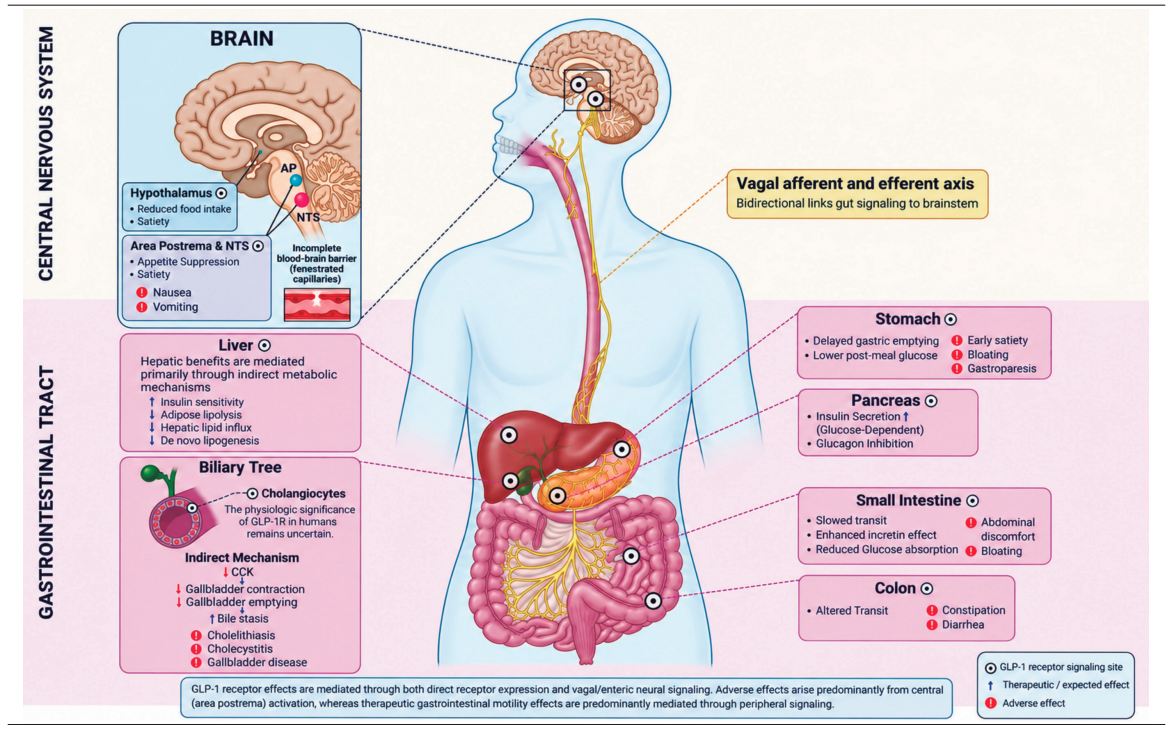
GLP-1 receptors are expressed throughout the GI tract in gastric smooth muscle, enteric neurons, and vagal afferent terminals of the stomach; and in enteroendocrine cells, smooth muscle, and the myenteric plexus of the small intestine mediating effects on motility, secretion, accommodation, and nutrient absorption.5, 6, 23 Critically, GLP-1 receptors are also expressed in key CNS regions: the area postrema, NTS, hypothalamus, and brainstem.6, 22 The area postrema, lacking a complete blood-brain barrier, functions as a chemoreceptor trigger zone for emesis and carries high GLP-1 receptor density.24, 25 The NTS integrates vagal afferent input with central satiety and nausea pathways, forming a functional axis with peripheral gut signaling (See Figure 1).22
Figure 1. Central and Peripheral Mechanisms Underlying the Therapeutic and
Gastrointestinal Adverse Effects of GLP-1 Receptor Agonists
This dual peripheral-central receptor architecture explains both the therapeutic actions and GIAEs of
GLP-1 RA. Emerging evidence suggests that peripheral GLP-1 receptor activation via vagal afferents and direct
enteric nervous system signaling mediates DGE and altered motility, effects that are therapeutically desirable
for suppressing postprandial glucose and inducing satiety.6, 22, 26, 27
In contrast, there is
evidence from experimental animal studies that nausea and vomiting arise from central effects of
GLP-1.28
Centrally located GLP-1 receptors modulate gastric slow waves and cardiovascular function in ferrets consistent with the induction of nausea predominantly through central signaling, e.g. at the area postrema.28, 29 Preclinical studies demonstrate that area postrema-specific GLP-1 receptor ablation abolishes retching-like behavior without compromising metabolic benefits, suggesting a dissociation between emetic and metabolic pathways. While preserving therapeutic efficacy for glycemic control and satiety, GIP receptor co-agonism may attenuate emesis through GABAergic inhibitory neurons in the area postrema/NTS that locally silence the same emetic circuitry activated by GLP-1 receptor signaling.30, 31
2.2 Effects on Gastric Emptying
DGE is one of the adverse effects most associated with GLP-1 RA, although the proportion of patients who objectively develop DGE varies across studies. However, this delay appears to attenuate over time, a phenomenon known as tolerance.8, 32 – 34
Meier et al. demonstrated that intravenous GLP-1 infusion at pharmacological concentrations was associated with 74% gastric retention at 4 hours compared with 34% with placebo.35 The magnitude of this effect is driven less by potency than by receptor-occupancy kinetics. Short-acting agents, such as twice-daily exenatide, have plasma half-lives of 2–3 hours and produce intermittent supraphysiologic receptor stimulation, preserving receptor sensitivity and causing pronounced, sustained delays in gastric emptying.36 In a meta-analysis, GLP-1 RA significantly delays gastric emptying of solids, increasing GET½ by a mean of 74 minutes (95% CI, 46–101), with a large effect size (SMD 2.38; 95% CI, 1.05–3.71; p < 0.001). The delay was greater with short-acting agents, which prolonged GET½ by 116 minutes (SMD 3.86).37 In contrast, long-acting agents, including liraglutide and dulaglutide, provide near-continuous receptor occupancy, leading to tolerance and attenuation of the gastric effect over time.36, 38
This distinction has important clinical implications. Short-acting agents primarily reduce postprandial glucose excursions by slowing gastric emptying, whereas long-acting agents lower fasting glucose mainly through insulinotropic and glucagon-suppressive effects.36, 38, 39
A longitudinal analysis from a clinical trial of patients with normal GE at baseline treated with liraglutide (n = 67) further illustrates this pattern: 57% developed significant DGE after treatment for 5 weeks, but tolerance led to normalization in approximately half of these patients by 16 weeks, leaving persistent delay in about 30%. Consistently, the median delay decreased from 70 minutes at 5 weeks to 30.5 minutes at 16 weeks, although it remained statistically significant.34 This residual delay is clinically relevant: further analysis suggests that it correlates with weight loss, explaining approximately 20% of its variance, and that it may contribute to retained gastric contents and periprocedural aspiration risk.40, 41
Although GLP-1 RA can delay gastric emptying, the severity of nausea does not correlate linearly with the degree of gastric delay.42 – 44 This dissociation is supported by the observation that long-acting agents may cause nausea despite tolerance of gastric effects.6, 22, 42 Overall, nausea appears to be driven primarily by central mechanisms, as discussed in Section 2.1. This is consistent with the greater clinical benefit of centrally acting antiemetics, such as ondansetron, compared with prokinetic agents.31, 45, 46
Taken together, these observations support a multimodal approach that addresses both peripheral and central mechanisms, tailored to individual patient´s symptom profile, consistent with the predominant clinical use of antiemetics.
2.3 Effects on Intestinal Motility and Transit
Beyond the stomach, GLP-1 RA significantly influences small intestinal and colonic motility, explaining the diverse GI symptoms encountered in clinical practice.
In the small intestine, a clinical trial in patients with T2DM demonstrated that exenatide reduces proximal pressure waves by approximately 30%, decreases intestinal flow velocity, and prolongs small bowel transit by 20–40 minutes.23 These effects attenuate nutrient absorption and enhance incretin signaling contributing to therapeutic efficacy but also likely predispose to bloating, abdominal discomfort, and altered bowel habits.6, 23
Effects of GLP-1 RA on small intestinal motility can also be inferred from a 4-week treatment cross-over study with daily SC administration of liraglutide (dose escalated from 0.6 mg to 1.8 mg/day), which reduced chronic high bowel frequency in eight patients with colectomy and ileal pouch anal anastomosis.47
Colonic responses are more heterogeneous and likely explain the paradoxical occurrence of diarrhea and constipation across patients. Some evidence supports delayed colonic transit favoring constipation, while other data suggest accelerated transit or altered secretion driving diarrhea.32, 48, 49 A retrospective case series using the wireless motility capsule documented prolonged whole-gut transit time in more than 40% of patients treated with GLP-1 RA.50 A preliminary report of a propensity score-weighted retrospective cohort study of adult patients with T2DM and/or obesity who underwent clinically-indicated whole-gut transit assessment over 48 hours at a tertiary referral practice found that GLP-1 receptor agonist is associated with delayed colonic transit in almost 30% of individuals, compared with less than 20% in controls.51
The mechanisms likely involve direct effects on colonic smooth muscle, enteric nervous system modulation, and altered nutrient delivery from changes in upper gastrointestinal transit. This heterogeneity may reflect differences in GLP-1 receptor signaling pathways, regional colonic effects, and patient-specific factors, all of which remain under investigation.22, 32, 33, 48, 52
GLP-1 RA may additionally influence intestinal secretion and mucosal permeability through enterocyte-level effects, though these mechanisms remain incompletely characterized.52, 53
2.4 Pharmacokinetic and Pharmacodynamic Factors
The gastrointestinal tolerability of GLP-1 RA is influenced by four key pharmacological factors: dose-response relationships, formulation class, tolerance, and drug interactions.8, 54
Higher doses of GLP-1 RA are associated with an increased risk of GIAEs.54, 56 These events, most commonly nausea, vomiting, diarrhea, and constipation, follow a consistent dose-response pattern and occur most frequently during dose escalation.56 Higher event rates have been reported with maximal or higher doses of dulaglutide, semaglutide, and tirzepatide in clinical trials (See Table 1).
Although formulation class and pharmacokinetic profile influence the pattern of GIAEs, they do not reliably predict overall tolerability.10, 56, 57 In general, long-acting agents provide steadier drug exposure, and are often considered better tolerated.4, 7, 32, 58 However, clinical trial data do not uniformly support this assumption, as several long-acting agents, particularly higher-dose semaglutide and tirzepatide, are consistently associated with GIAEs (See Table 1). In contrast, the oral versus injectable route appears less important once dose and systemic exposure are considered, with agent-specific properties driving much of the variability.54
Tolerance and longer exposure may reduce gastrointestinal symptoms during GLP-1 RA therapy.6, 23, 33, 59 Gastric emptying delay and related symptoms often attenuate after initiation, as discussed in Section 2.2. This adaptation appears stronger for peripheral motility effects than for centrally mediated nausea, which may persist in susceptible patients.24, 25, 32
Finally, data on drug–drug and comorbidity interactions affecting GLP-1 RA gastrointestinal tolerability remain limited. Some evidence suggests additive symptom burden with metformin and higher risk with motility-slowing agents or baseline gastroparesis; however, recommendations largely rely on indirect analyses, case series, and expert guidance.54 – 56, 60 – 62
GI-related discontinuation is a clinically important marker of tolerability. In randomized trials, discontinuation attributable to GIAEs ranges from under 2% to approximately 19% with high-dose GLP-1 RA varying by agent, dose, indication, and trial design.8, 57, 63 Nausea and vomiting account for most withdrawals, followed by diarrhea, abdominal pain, and constipation (See Table 1).
Discontinuation usually occurs during dose escalation, when symptoms peak; for example, in the STEP program trials, the cumulative incidence of first GIAEs plateaued after week 20, and most discontinuations occurred within the escalation period. Risk is higher with rapid escalation, baseline GI symptoms, metformin use, pre-existing GI disease, female sex, and obesity.10, 15, 45, 61, 64 Notably, elevated GI symptom rates did not uniformly translate into treatment discontinuation: in ESSENCE, discontinuation due to adverse events was numerically lower with semaglutide than placebo despite substantially higher GI event rates, and in the randomized phase of STEP-4 discontinuation was nearly identical between treatment arms, suggesting that with gradual titration, established tolerance, and adequate counseling, GIAEs are largely manageable.13, 65
Table 1. Reported Gastrointestinal Adverse Events in GLP-1 Receptor Agonist
Clinical Trials, Stratified by Treatment Indication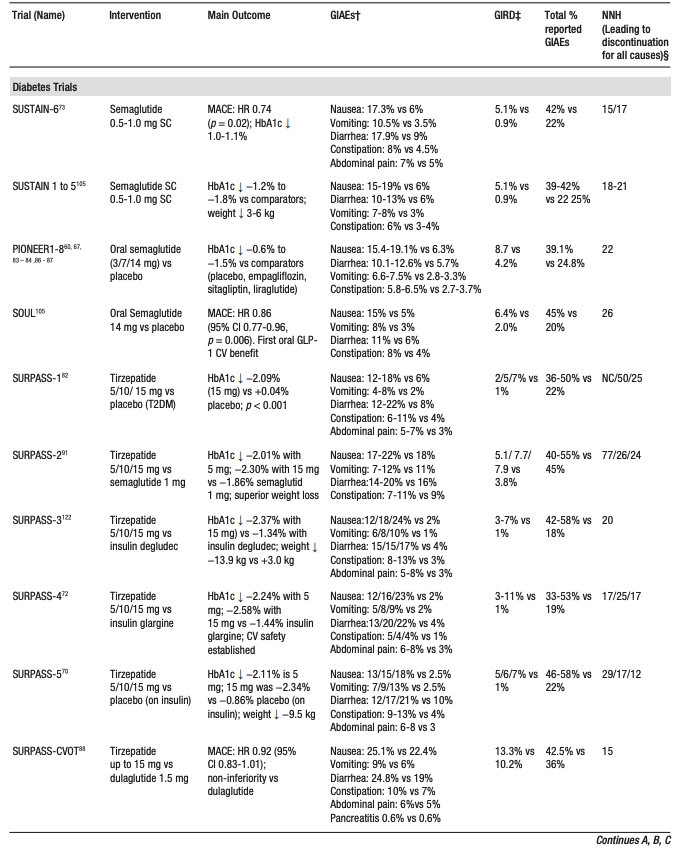
Continuation A. Table 1.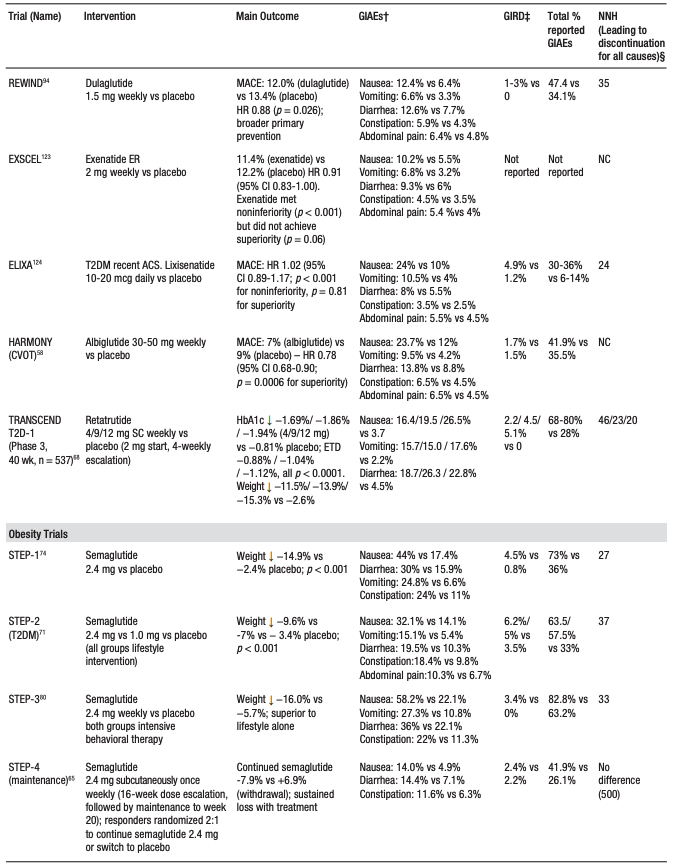
Continuation B. Table 1.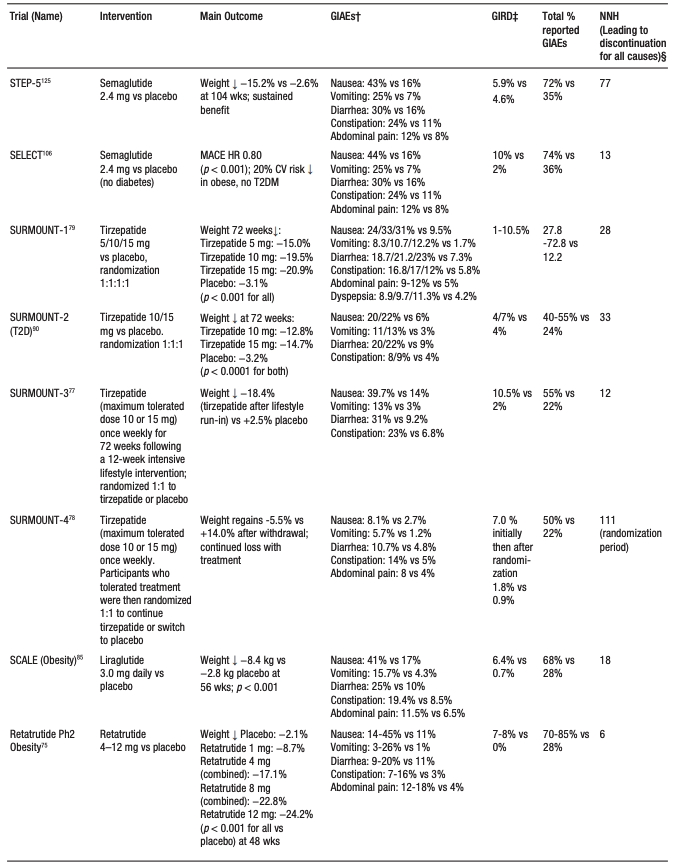
Continuation C. Table 1.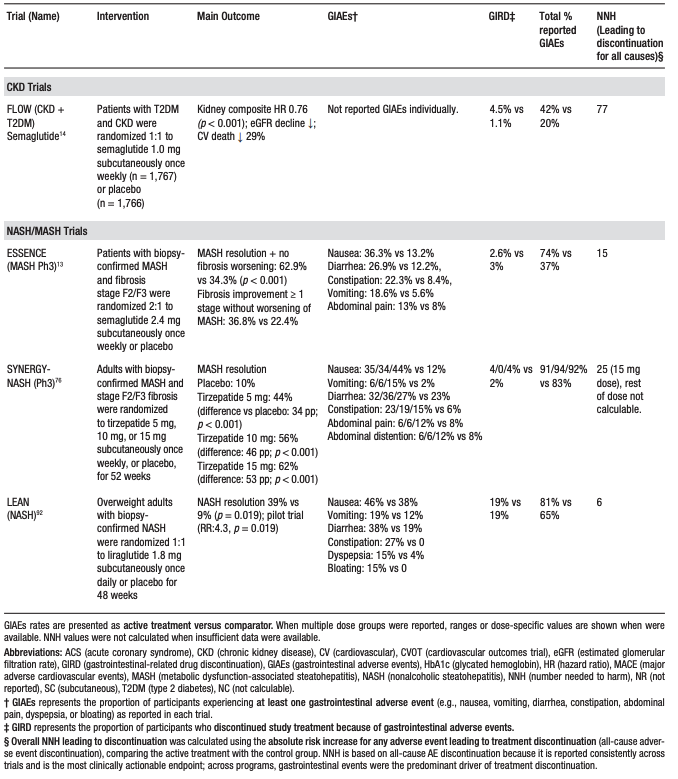
3.1 Nausea
Nausea is the most frequently reported GIAEs across GLP-1 RA-based therapy trials, ranging from approximately 10% to 58%.66 – 72 The estimated nausea-specific NNH versus placebo ranged from approximately 3 in high-dose obesity trials to over 20 with diabetes-dose regimens, meaning that one additional case of nausea occurred for every 3 to 20 patients treated. In active-comparator trials such as SURPASS-2, the excess nausea risk with tirzepatide versus semaglutide 1 mg was minimal, and a meaningful NNH could not be derived. Semaglutide demonstrated a clear dose- and indication-dependent increase, with nausea increasing from approximately 15-19% in diabetes trials, 32-58% in obesity trials and approximately 36% in MASH (ESSENCE).13, 73 - 74 Lower NNH values were observed with retatrutide (a triple GIP/GLP-1/glucagon receptor agonist) and higher-dose obesity or MASH regimens, indicating a stronger nausea risk for this group of patients.13, 72, 75 – 79
3.2 Vomiting
Vomiting was reported less frequently than nausea but followed a similar dose- and
indication-dependent pattern. Across trials, vomiting ranged from approximately 4% to 27%, with an estimated
vomiting-specific NNH versus placebo of approximately 5 to over 50.23, 64, 65, 74, 77, 80 –
86
For semaglutide, vomiting rates were lower in diabetes and CKD trials, generally ranging from
5% to 10.5%, but increased to 15% to 25% in higher-dose obesity and MASH trials.13, 14, 65, 81, 83, 84, 86
– 89 For tirzepatide, vomiting ranged from 4% to 12% in diabetes trials and increased to approximately
11% to 20% in obesity trials and MASH trials.76, 77, 79, 82, 90, 91 A distinctive vomiting signal was
observed with retatrutide: in TRANSCEND-T2D-1, vomiting reached 15.7-17.6% of patients versus 2.2% with placebo
at diabetes doses rates, comparable to those observed with semaglutide only at obesity doses. These findings
yielded among the lowest vomiting-specific NNH values (~7-8) in the diabetes trials.68, 75
3.3 Diarrhea
Diarrhea was commonly reported across GLP-1 RA-based therapy trials, with rates ranging from approximately 7% to 38%. For semaglutide, diarrhea rates were lower in diabetes and CKD trials, generally ranging from 10% to 17.9%, but increased to approximately 19.5% to 30% in higher-dose obesity and MASH trials.13, 14, 65, 81, 83 - 84, 86 – 89
For tirzepatide, diarrhea ranged from 12% to 22% in diabetes trials and approximately 14% to 23% in obesity trials and MASH trials.76, 77, 79, 82, 90 - 91 The highest diarrhea rates were observed with retatrutide in TRANSCEND-T2D-1 (18.7-26.3% vs 4.5%) and with liraglutide in LEAN (38% vs 19%), although the latter derives from a pilot trial of 52 patients and should therefore be interpreted with caution. Notably, in TRANSCEND-T2D-1 diarrhea exceeded nausea at the 9 mg dose, a pattern not typical of isolated GLP-1 receptor agonist and possibly reflecting glucagon-receptor agonist mediated effects on intestinal secretion and transit.68, 75, 92
Real-world studies report higher diarrhea rates with GLP-1 RA than those reported in clinical trials, likely reflecting broader populations and longer follow-up.18 Diarrhea may occur early after the treatment or persist, reflecting variable effects on intestinal motility and secretion.93 Persistent or severe diarrhea warrants evaluation for alternative causes, including concomitant pharmacotherapy use, GI infections, IBD, celiac disease, microscopic colitis, bile acid malabsorption, and pancreatic insufficiency.
3.4 Constipation
Constipation was reported across GLP-1 RA-based therapy trials, with rates ranging from approximately 3.5% to 24%, and up to 27% in the small LEAN pilot (versus 0% with placebo). The estimated constipation-specific NNH ranged from ~4 to ~90.76, 79, 92, 94 Constipation associated with GLP-1 RA may occur either early after treatment initiation or after months of therapy and in severe cases can lead to fecal impaction or bowel obstruction. Patients with pre-existing constipation, slow-transit constipation, or pelvic floor dysfunction are at increased risk and require close monitoring.32, 95
For semaglutide, constipation was relatively infrequent in diabetes patients and CKD trials, including SUSTAIN-6 and SOUL, ranging from 6% to 8%, but increased to approximately 16% to 24.2% in higher-dose obesity and MASH trials.13, 65, 81, 83 - 84, 86 – 89
For tirzepatide, constipation ranged from 6% to 13% in SURPASS diabetes trials and approximately 12% to 22% in SURMOUNT obesity trials and SYNERGY-NASH.76 - 77, 79, 82, 90 - 91 In the phase 2 obesity trial, retatrutide was associated with constipation in 7–16% of participants versus 3% with placebo; constipation was not reported among the most frequent adverse events in the phase 3 TRANSCEND-T2D-1 topline data, and dose-specific rates await full publication.68, 75
3.5 Abdominal Pain and Discomfort
Abdominal pain was less frequent and less consistently reported than other GIAEs. Across trials that included this outcome, abdominal pain ranged from approximately 5% to 18%.13, 38, 49, 60, 64, 75, 77, 80, 87, 96 For semaglutide, rates were lower in diabetes and CKD trials, ranging from 5.5% to 7%, but increased to approximately 10.3% to 13% in higher-dose obesity and MASH trials.13 - 14, 65, 81, 83 - 84, 86 - 89 For tirzepatide, abdominal pain ranged from 5% to 8% in diabetes trials and approximately 6% to 12% in obesity trials and MASH. The strongest rates were observed with retatrutide in the phase 2 obesity trial, where abdominal pain reached 12-18% versus 4% with placebo; notably, abdominal pain was not reported in the TRANSCEND-T2D-1 topline data.68, 75
3.6 Gastroparesis and Severe Gastric Dysmotility
Although DGE is a pharmacological class effect of GLP-1 RA, clinically significant gastroparesis occurs in only a subset of users. Reported incidence varies, with real-world estimates around 5.1%.18 Risk is higher with baseline dysmotility, diabetic autonomic neuropathy, rapid escalation, higher doses, female sex, and motility-altering drugs. Diagnosis requires compatible symptoms, objectively documented DGE of solids, and exclusion of mechanical obstruction. The extent to which these changes are reversible after drug discontinuation remains incompletely defined.8, 19, 39, 42, 57, 97 – 98
3.7 Biliary Adverse Events
Biliary adverse events occur in approximately 1-3% of patients treated with GLP-1 RA, with randomized evidence demonstrating a modest class-wide increase driven predominantly by cholelithiasis.55 A meta-analysis of 76 randomized controlled trials (RCT; > 100,000 participants) reported increased risks of composite gallbladder/biliary disease (RR 1.37), cholelithiasis (RR 1.27), cholecystitis (RR 1.36), biliary disease (RR 1.55), and cholecystectomy (RR 1.70), with greater risk at higher doses, treatment durations > 26 weeks, and weight-loss indications.99 Liraglutide demonstrated the highest drug-specific risk (RR 1.79) for cholecystitis or cholelithiasis, followed by dulaglutide (RR 1.35), whereas high-dose SC semaglutide showed increased risk (RR 1.58 for ≥ 1.0 mg); risk with exenatide was borderline, while oral semaglutide, lixisenatide, and albiglutide were not significantly associated.99 More recent placebo-controlled data confirmed increased cholelithiasis (RR 1.46) but not cholecystitis or cholangitis.100 Observational data similarly suggest a modest increase in comparison to SGLT2 inhibitors (HR 1.15), although absolute excess risk remains low.101 Mechanistically, GLP-1 RA reduces gallbladder motility and emptying, potentially through suppression of cholecystokinin, while rapid weight loss promotes biliary cholesterol supersaturation.55, 97 Risk appears cumulative, generally emerging after approximately 6 months and diverging from comparator therapies after longer follow-up. In contrast, pancreatitis risk remains reassuring. Placebo-controlled RCT and large cohorts demonstrate no clinically meaningful increase, although isolated observational studies report small, predominantly early signals.99 - 100, 102 No GLP-1 RA has a consistent pancreatitis-specific risk in high-quality evidence; pharmacovigilance signals, particularly for liraglutide, remain hypothesis-generating and do not prove definite association. Overall, biliary complications represent an uncommon but clinically relevant class effect, whereas acute pancreatitis is not supported as a major GLP-1 RA toxicity. Risk assessment should consider dose, duration, indication, and magnitude of weight loss.
4.1 Patients with T2DM vs Patients with Obesity
GLP-1 RA gastrointestinal tolerability appears driven more by dose, agent, and
patient factors than by diabetes versus obesity status alone.17, 56, 60 Patients with T2DM may
have baseline delayed or rapid gastric emptying from autonomic neuropathy, whereas patients with obesity but
without diabetes often have preserved gastric reserve.5, 103 - 104 Notably, at identical doses,
patients with T2DM consistently report lower GIAEs than those without diabetes. With semaglutide 2.4 mg,
nausea occurred in 32.1% of patients with T2DM (STEP-2) versus 44% of those without diabetes (STEP-1);
similarly, with tirzepatide, a similar pattern is seen between SURMOUNT-2 (nausea 20-22%) and SURMOUNT-1
(24–33%) (Table 1). Proposed explanations include diabetes-related autonomic dysfunction blunting visceral
afferent signaling, prior incretin or metformin exposure, and differences in baseline gastric
physiology.8, 33, 55 – 57
The higher symptom burden in patients treated for obesity
underscores the importance of gradual titration, counseling, and education to reduce premature
discontinuation during therapy.
4.2 Pre-existing GI Disorders
Patients with pre-existing GI disorders are at higher risk of GLP-1 RA-related adverse events and require individualized selection, counseling, and monitoring. Symptomatic gastroparesis or diabetic autonomic neuropathy may predispose patients to severe nausea, vomiting, early satiety, and nutritional compromise, making these baseline conditions a relative contraindication in selected cases; when treatment is pursued despite these conditions, the slowest available titration schedule and early reassessment are advisable.8, 54-55, 57, 64 IBS symptoms may worsen according to subtype, although improvement of the bowel dysfunction symptoms is possible. GERD effects are variable, reflecting competing influences of DGE and weight loss.5, 33, 108 Overall, severe gastroparesis, bowel obstruction, severe IBD, and pancreatitis warrant careful risk-benefit assessment before commencing GLP-1 RA treatment.54 - 55, 57, 97 Importantly, the trials summarized in Table 1 systematically excluded patients with significant pre-existing GI disease, gastroparesis, or prior bariatric surgery. The adverse event rates summarized in Table 1 therefore describe a GI-healthy population and likely underestimate the symptom burden in the patients discussed in this section, for whom no randomized safety data exist.
4.3 Age-Related Differences
Age-related differences influence GLP-1 RA tolerability, although direct cross-trials comparisons are confounded: the older populations in Table 1 (SELECT, SOUL, FLOW, and the cardiovascular outcome trials; mean ages 62-67 years) received lower doses and, in several cases, had restricted safety-event capture, whereas the younger populations in obesity trials received the highest doses.14, 105 - 106 Within this limitation, GI-related discontinuation in the older CKD population of FLOW (4.5% vs 1.1%) was comparable to that in younger diabetes cohorts, arguing against a marked age-driven intolerance signal.14, 57, 97 Older patients may face greater constipation, dehydration, electrolyte disturbance, polypharmacy risks, and higher discontinuation, supporting lower starting doses and slower titration. Younger adults generally tolerate therapy well, while pediatric and adolescent use is increasing, with limited evidence regarding GIAEs in this group.10, 15, 55
4.4 Sex-Related Differences
Female patients experience higher rates of GLP-1 RA- associated GIAEs, especially nausea, vomiting, abdominal pain, and constipation, likely due to sex hormone effects on motility, slower gastric emptying, visceral sensitivity, symptom reporting, and pharmacokinetic differences.93, 107 Sex-based dose adjustment is not recommended, but slower titration and symptom management are important. Sex composition also confounds cross-trial comparisons in Table 1: the obesity trials enrolled predominantly women (74-78% in the STEP program), whereas SELECT (72% male) and the cardiovascular outcome trials enrolled predominantly men. Part of the apparent indication-related gradient in GIAEs therefore reflects differences in population sex distribution, in addition to differences in GLP-1 RA dose.65, 71, 80, 106
4.5 Other Comorbidities
Comorbidities and polypharmacy substantially affect GLP-1 RA tolerability. CKD generally does not require dose adjustment, and the FLOW trial provides direct reassurance: in patients with T2DM and CKD (mean eGFR 47 mL/min/1.73 m²), gastrointestinal related drug discontinuation was 4.5% versus 1.1% with placebo, and overall discontinuation due to adverse events was only marginally higher than placebo (13.2% vs 11.9%) over a median 3.4 years (Table 1). The principal concern is vulnerability to dehydration, acute kidney injury, and electrolyte disturbance when vomiting or diarrhea does occur, warranting a lower threshold for laboratory reassessment and temporary dose interruption in this population.14 In patients with established cardiovascular disease, the outcome of trials (SELECT, SOUL, SURPASS-CVOT, HARMONY, REWIND) demonstrate cardiovascular benefit that generally outweighs GI concerns; in SELECT, despite GI events driving discontinuation in 10% of semaglutide-treated patients versus 2% with placebo, serious adverse events were less frequent with semaglutide than placebo.88, 94, 105 - 106 Concomitant cardiovascular medications may nonetheless contribute to GI symptoms. Hepatic impairment requires caution in advanced disease. Metformin, opioids, anticholinergics, and other GI-active drugs can amplify adverse effects, supporting medication review and individualized monitoring during therapy.
5.1 Preventive Strategies
Patient selection, risk assessment, and screening for pre-existing gastrointestinal disorders are essential to identify patients at increased risk of GIAEs and to guide individualized treatment and monitoring strategies. The baseline assessment should include a history of gastroparesis, chronic nausea, severe GERD, IBS, IBD, prior bowel obstruction or gastrointestinal surgery, and the use of opioids or other medications that affect GI motility.45, 108 In patients with suspected gastroparesis, a GES may be considered before initiating therapy.109
Pre-treatment counseling and expectation setting are critical for improving treatment adherence and reducing premature discontinuation. Patients should be informed that GI symptoms, particularly nausea, are typically mild, transient, and most pronounced during the first month of therapy. They should also receive guidance on dose escalation and dietary modifications that may help minimize symptom severity.108, 110
Gradual dose titration remains the most effective strategy for preventing GIAEs. Therapy should be initiated at the lowest recommended dose, such as semaglutide 0.25 mg weekly or liraglutide 0.6 mg daily, followed by gradual dose escalation. In patients who experience poor tolerability, extending the duration of each titration step may further reduce symptom burden, whereas rapid dose escalation increases the risk of GIAEs and treatment discontinuation.
5.2 Non-Pharmacological Interventions
Dietary modifications are the cornerstone of non-pharmacological management and can effectively reduce nausea, early satiety, abdominal discomfort, and bowel symptoms. Patients should be encouraged to consume small, frequent, low-fat meals, eat slowly, avoid foods that trigger symptoms, maintain adequate hydration, gradually increase dietary fiber to manage constipation, and consider temporary fiber reduction or a low-FODMAP diet if diarrhea predominates.111
Adjusting meal timing and injection schedules may also improve tolerability, particularly by administering short-acting GLP-1 RA 30-60 minutes before meals or switching long-acting agents to bedtime in patients with significant nausea.111, 112
Adequate hydration is especially important for individuals with vomiting or diarrhea and can be maintained through frequent small sips of fluids, clear liquids during severe nausea, oral rehydration solutions when needed. Excessive caffeine and alcohol intake should also be limited.111, 113
Lifestyle measures further complement symptom management and include walking after meals, avoiding recumbency immediately after eating, elevating the head of the bed in patients with GERD, wearing loose-fitting clothing, practicing stress-reduction techniques, and maintaining a symptom diary to identify potential triggers.111
5.3 Pharmacological Therapy
GIAEs are the most common cause of GLP-1 RA intolerance, affecting 28%-91% of patients. In the absence of indications for treatment discontinuation, symptoms are best managed through gradual dose titration and dietary and lifestyle modification. Targeted pharmacological therapy should be considered when non-pharmacological interventions are insufficient to control symptoms.45, 97, 112 Pharmacotherapy is reserved for patients without an indication for discontinuation, in whom alternative etiologies have been excluded and non-pharmacological measures have failed. For nausea and vomiting, ondansetron (4-8 mg orally two to three times daily) is preferred; headache, constipation, and QT prolongation are the principal concerns. Metoclopramide (5-10 mg orally before meals and at bedtime) should be reserved for objectively DGE and limited to 12 weeks given the risk of tardive dyskinesia. Prochlorperazine is an alternative, with sedation and extrapyramidal effects. Diarrhea is treated with loperamide (2-4 mg after each loose stool, maximum 16 mg/day) and, when bile acid malabsorption is suspected, with sequestrants, administered at least 4 hours apart from oral semaglutide.45, 95, 109, 112 Constipation responds to soluble fiber, polyethylene glycol 17 g daily, or magnesium salts (should be avoided in CKD). Stimulant laxatives and secretagogues are reserved for refractory cases. No pharmacotherapy is established for abdominal pain.45, 95, 108, 114
5.4 When to Stop GLP-1 RA Therapy and Refer to Gastroenterology or a Motility Specialist
GLP-1 RA should be discontinued in patients with severe or persistent gastrointestinal symptoms, suspected pancreatitis, significant gallbladder disease, or DGE that increases aspiration risk, especially in the perioperative setting (Table 2).95, 110, 114 - 115
Table 2. Serious Gastrointestinal Adverse Events During GLP-1 RA Therapy.
Recommended Action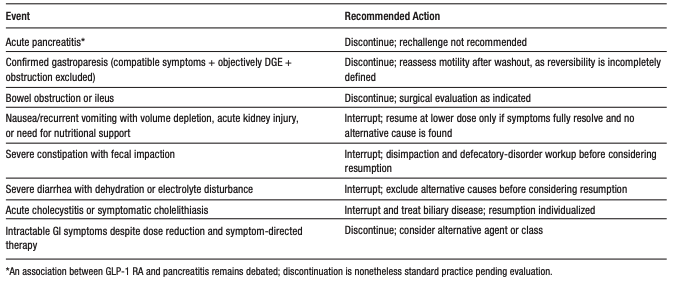
Referral to a gastroenterologist or motility specialist should be considered in patients with suspected gastroparesis, particularly when nausea, vomiting, early satiety, or postprandial fullness persist despite discontinuation of GLP-1 RA therapy, when symptoms lead to significant nutritional compromise, or when food retention is identified on endoscopy.110, 115 Referral is also indicated for refractory GI symptoms that fail to improve despite dietary modification, slower dose titration, pharmacological therapy, or temporary drug discontinuation. Patients with medically refractory gastroparesis, defined by persistent symptoms and objectively documented DGE despite optimized antiemetic and prokinetic treatment, should be managed at specialized centers for multidisciplinary care.109 - 110, 114 - 115
If food retention has progressed to a bezoar, endoscopic fragmentation with or without dissolution therapy remains first-line treatment. Intravenous erythromycin (3 mg/kg or 250 mg) or azithromycin (250 mg), both motilin receptor agonists, may be used adjunctively to stimulate antral contractility and promote clearance. Supporting data are limited to case reports and small series. QT prolongation warrants attention, and tachyphylaxis limits repeated administration.109
Finally, patients requiring specialized motility testing, including GES, antroduodenal manometry, wireless motility capsule, or whole-gut transit studies, should be referred to tertiary motility centers.
Expert consensus converges on three axes that define the next phase of GLP-1 RA development: expansion into non-glycemic, non-weight indications; higher-potency multi-agonist molecules (dual GIP/GLP-1, GLP-1–glucagon, GLP-1–amylin, triple GIP/GLP-1–glucagon); and oral small-molecule formulations to improve access and convenience. All three increase either the number of patients exposed or the intensity of receptor activation, with direct implications for gastrointestinal tolerability.32, 97, 116
Formulations and receptor engineering. Oral semaglutide produces GIAEs rates comparable to injectable formulations, suggesting that systemic receptor activation, rather than route of administration, drives symptoms. Modified-release, ultra-long-acting, and targeted-delivery systems remain plausible strategies, but none has yet reduced GIAEs. Multi-agonist molecules may compound GE through additive effects on gastric emptying and visceral sensation; however, dedicated motility endpoints are largely absent from these programs.32 - 33
Expanding indications. Weight-independent benefits are documented in SELECT (cardiovascular), ESSENCE (liver), and STRIDE (peripheral artery disease), raising the question of whether optimal doses for these outcomes differ from those established for T2DM and obesity, a difference that could substantially alter the GIAEs profile. Results in neurodegeneration are mixed: EVOKE showed no effect on progression despite favorable observational signals, while trials in Parkinson disease yielded inconsistent results.13, 106, 117 - 118 In alcohol use disorder, Swedish registry data involving more than 227,000 individuals showed lower hospitalization with semaglutide (HR 0.64) and liraglutide (HR 0.72). More than 12 trials are currently ongoing.119
Adherence as the limiting factor. Discontinuation reaches 46.5% within 12 months in patients with T2DM and 64.8% in those without. Since GI intolerance is among the most cited reasons for therapy discontinuation, mitigating these symptoms may contribute as much to real-world outcomes as further gains in therapeutic potency.120 - 121
Predictive biomarkers. Identifying patients at risk of GI intolerance before treatment initiation would allow individualized titration and prophylaxis. Candidate predictors include GLP1 receptor variants, baseline gastric emptying, microbiome signatures, and machine-learning-based pharmacogenomic models, all of which require prospective validation with standardized motility endpoints.32, 121
Gastrointestinal adverse events are the dominant tolerability limitation of GLP-1 receptor agonist therapy and one of the leading drug-related reasons for treatment discontinuation. They arise from a dual peripheral-central mechanism: peripheral GLP-1 receptor activation delays gastric and small intestinal transit, while receptor activation at the area postrema and NTS drives nausea and emesis. There have been no RCT to compare use of antiemetics with prokinetics for nausea and emesis. The fact that there are no safe prokinetics is probably a pivotal reason why these GIAEs are managed predominantly by antiemetics.
Across clinical trials, nausea, vomiting, diarrhea, constipation, and abdominal pain follow a consistent dose- and indication-dependent gradient, with the greatest burden observed in higher-dose regimens for obesity and MASH and with multi-agonist molecules. Most symptoms are mild, emerge during dose escalation, and attenuate with continued exposure. However, symptoms persist in a clinically important minority of patients, and a smaller subset develops symptomatic gastroparesis.
Management therefore rests on anticipation rather than rescue: baseline screening for pre-existing motility and functional gastrointestinal disorders, explicit pre-treatment counseling, initiation at the lowest effective dose with gradual titration, and dietary and lifestyle measures before pharmacotherapy. Clinicians should also recognize the limited set of presentations -suspected pancreatitis, significant gallbladder disease, refractory symptoms, nutritional compromise, and periprocedural aspiration risk- that warrant discontinuation or subspecialty referral.
As this class expands into non-glycemic indications and higher-potency multi-agonists enter routine practice, both the number of exposed patients and the intensity of receptor activation will increase. The most pressing needs are prospective trials that incorporate standardized and validated motility measurements and endpoints, validated predictive biomarkers of gastrointestinal intolerance, and evidence-based management algorithms to replace the expert consensus on which current recommendations largely depend.
Intellectual property. The intellectual property rights to the original content of this manuscript, including the text, tables, figures, and original figure designs, belong to the authors of this review. Any reproduction, adaptation, distribution, or reuse of these materials should be subject to appropriate authorization and acknowledgment of the authors, in accordance with applicable copyright and publication policies.
Funding. The authors declare that there were no external sources of funding.
Conflict of interest. Madhusudan Grover has received research grants from Takeda and Alfasigma pharmaceuticals. He advises Alfasigma pharmaceuticals with honoraria paid to his employer. Michael Camilleri serves as an adviser to Lilly with honoraria paid to his employer.
Copyright

© 2026 Acta Gastroenterológica latinoamericana. This is an open-access article released under the terms of the Creative Commons Attribution (CC BY-NC-SA 4.0) license, which allows non-commercial use, distribution, and reproduction, provided the original author and source are acknowledged.
Cite this article as: Zúñiga Cisneros J, Camilleri M and Grover M. Glucagon-Like Peptide-1 Receptor Agonist and Gastrointestinal Adverse Effects: A Comprehensive Review. Acta Gastroenterol Latinoam. 2026;56(3):269-288. https://doi.org/10.52787/agl.v56i3.690
Correspondence: Madhusudan Grover
Email: grover.madhusudan@mayo.edu
Acta Gastroenterol Latinoam 2026;56(3):269-288